A circular red mark above Donald Trump’s left eyebrow recently drew attention as he spoke with reporters before leaving the White House. The White House did not immediately explain the mark, prompting speculation online about whether it could have resulted from an injury or fall. The discussion comes after Trump has previously been photographed with bruises on his hands and neck.
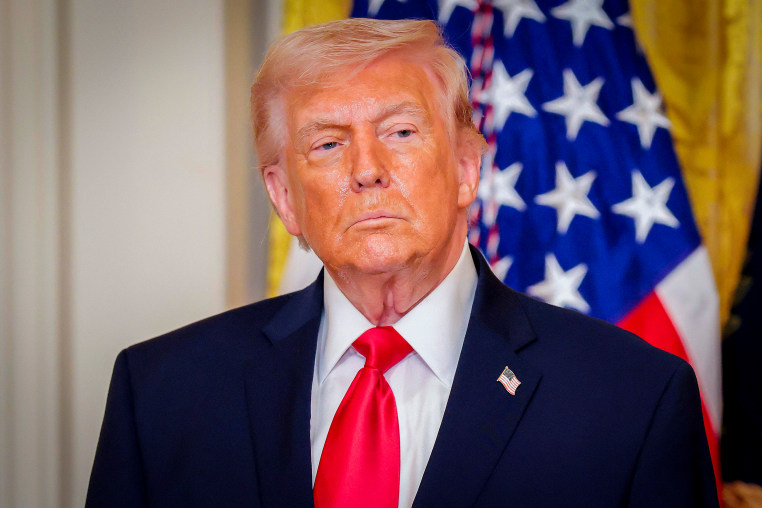
Trump’s recent bruises have received different explanations. A neck mark was previously attributed by his physician to a topical skin treatment, while Trump said an earlier bruise on his hand resulted from accidentally hitting it on furniture. He has also said that taking aspirin makes him more susceptible to bruising. His physician has reported that Trump takes 325 milligrams of aspirin daily, a dosage within the range used for some forms of aspirin therapy.
Questions about Trump’s health have also resurfaced because of his history of chronic venous insufficiency, which was disclosed after he experienced swelling in his lower legs. Medical evaluations reportedly found no evidence of deep vein thrombosis or arterial disease, and an echocardiogram showed no signs of heart failure. The condition is relatively common among older adults and can cause swelling, aching, and changes in the skin.

The eyebrow mark has not, by itself, established the cause of any health problem, and online speculation should not be treated as a medical diagnosis. Attention also grew after technical issues interrupted a March 11 event in Kentucky and a spectator briefly fainted during Trump’s remarks. While such moments can fuel public discussion, determining the significance of a bruise or other physical change requires reliable medical information rather than assumptions based on photographs.