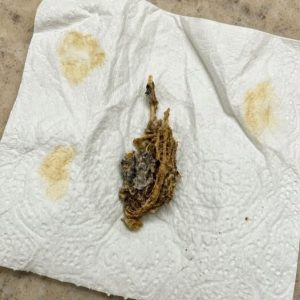
Finding a large wasp crawling slowly across your curtains can be unsettling, but one indoor wasp does not necessarily mean there is a nest hidden inside your walls. Wasps can enter through open doors and windows, damaged screens, cracks, vents, or small gaps around the home. Sometimes they simply wander inside while searching for shelter or food.
A sluggish wasp may also be less active because of cooler temperatures. As the weather changes toward the end of the warm season, some wasps become slower and may spend more time resting. If you see one near a window or curtain and there are no other signs of activity, it may simply have entered accidentally rather than indicating an infestation.
Repeated sightings, however, are worth investigating. If several wasps appear from the same crack, vent, roofline, or opening, there could be a nest nearby. Buzzing or rustling sounds coming from inside a wall may also suggest insect activity. Pay attention to where the wasps appear and whether they seem to be entering or leaving through the same location.
If you suspect a nest, avoid disturbing the area or attempting to remove it yourself. Wasps can become defensive when their nest is threatened, and some people can have serious allergic reactions to stings. A qualified pest-control professional can inspect the property and determine whether a nest is present and how it should be handled safely.
To reduce the chances of wasps getting indoors, repair damaged window screens, seal cracks and gaps around doors and windows, and keep openings closed when practical. One slow-moving wasp is usually not cause for alarm, but repeated activity in the same area is a good reason to investigate further.