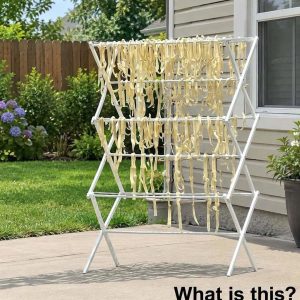
What Was Hanging in the Backyard? The Simple Truth Behind the Mystery
At first glance, the long, pale strands hanging outdoors looked unusual. Swaying gently in the breeze, they were difficult to identify without knowing their purpose. To someone seeing them for the first time, the strange sight could easily spark curiosity and even lead to imaginative explanations.
The truth, however, was much simpler: they were homemade noodles being dried in the sun. Once that detail became clear, the mysterious-looking scene suddenly seemed completely ordinary. Nothing about the strands or their surroundings had changed—the only thing that changed was the viewer’s understanding.
The noodles had been prepared and carefully hung outside so fresh air and sunlight could help remove moisture before they were stored or cooked. For families who make noodles at home, drying them this way can be part of a traditional food-preparation routine passed down through generations.
The scene also shows how much context influences what we see. Most people are accustomed to seeing noodles packaged in stores, sitting on a plate, or cooking in a pot. Seeing long strands hanging outdoors is far less familiar, which can make an ordinary object appear strange or mysterious.
In the end, there was no hidden secret behind the unusual-looking display. It was simply homemade food being prepared in a traditional way. The moment is a reminder that unfamiliar sights are not always something extraordinary. Sometimes, a little patience and curiosity are enough to reveal a perfectly simple explanation.
The Mystery of Lobster’s Green Goodies…
Lobsters are often served as a special meal, but opening a whole lobster can reveal a soft green substance inside the body. This mysterious material is called **tomalley**, and it is not leftover food or something that appeared during cooking. It is the lobster’s **hepatopancreas**, an organ that performs functions similar to the liver and pancreas, helping with digestion, nutrient absorption, metabolism, and energy storage.
Tomalley is usually green or greenish-brown and has a soft, creamy texture that is very different from the firm meat in the tail and claws. Its strong flavor is also much more concentrated. Some seafood lovers consider it a delicacy, while others find its appearance or taste unappealing. People who enjoy it may use small amounts in sauces, butter, soups, or spreads because it can add a rich seafood flavor.
However, there are important safety concerns. Because the hepatopancreas processes materials from the lobster’s food and environment, it can accumulate certain contaminants and marine biotoxins. Some toxins associated with harmful algal blooms may not be destroyed by cooking. For this reason, seafood safety authorities may advise people to avoid lobster tomalley from certain areas when toxin levels are elevated. **“Color isn’t a reliable test. Smell isn’t a reliable test. And tasting a little bit isn’t a good way to find out.”**
If you are preparing a whole lobster, the tomalley is found inside the body cavity and can simply be left untouched. There is no requirement to eat it, especially if you are uncertain about the lobster’s source or current local safety guidance. The familiar tail and claw meat remain perfectly enjoyable without it.
Ultimately, tomalley is a natural and important part of the lobster, not a sign that something has gone wrong. Some people appreciate its creamy texture and intense flavor, while others prefer to skip it. If you are considering eating it, current seafood-safety advice should come before appearance or taste.
Modify in 5 paragraphs without subtitles and less than 350 words, and modify the tittle please!What’s That Green Stuff Inside a Lobster? The Surprising Truth
What’s That Green Stuff Inside a Lobster? The Surprising Truth
If you have ever opened a whole lobster, you may have noticed a soft green substance inside its body. It may look unusual, but it is not spoiled food or something caused by cooking. Known as tomalley, this substance is the lobster’s hepatopancreas, an organ that plays important roles in digestion, nutrient absorption, metabolism, and energy storage.
Tomalley is typically green or greenish-brown and has a soft, creamy consistency that contrasts with the firmer meat found in the tail and claws. Its flavor can also be much stronger and more concentrated. Some seafood lovers consider it a delicacy and use it in sauces, soups, butter, or spreads, while others prefer to leave it behind.
There is, however, an important reason to be cautious about eating it. Because the hepatopancreas helps process substances from the lobster’s diet and environment, it can accumulate certain contaminants and marine biotoxins. Some toxins linked to harmful algal blooms may remain dangerous even after cooking, so seafood authorities can issue warnings about consuming tomalley from affected areas.
If you are preparing a whole lobster, the tomalley is located inside the body cavity and can simply be removed or left uneaten. Whether it is safe to consume depends partly on where the lobster came from and any current local seafood advisories. Appearance, smell, or a small taste cannot reliably determine whether harmful toxins are present.
So, that mysterious green material inside a lobster is actually a normal organ with a specific biological purpose. Some people enjoy its rich flavor, while others avoid it altogether. If you choose to eat it, checking current seafood-safety guidance for the lobster’s source is more important than judging it by its color or taste.
Ever Wondered What the Small Button on Your Seat Belt Is For?
If you’ve ever looked closely at a car’s seat belt, you may have noticed a small plastic button on the belt near the buckle. Often called a stop button, retaining button, or seat-belt stop, this simple piece has one main job: keeping the buckle in a convenient position when the belt is not being used.
The button is usually attached to the webbing just below the buckle. When you release the seat belt, the retractor pulls the belt back into its housing. Without the stop, the buckle could slide much farther down the belt, making it difficult to reach the next time you get into the car. The button works as a physical barrier that stops the buckle at a practical location.
The stop button is mainly a convenience feature, not a component designed to protect passengers during a crash. The important safety parts include the belt webbing, buckle, latch, retractor, anchors, and, depending on the vehicle, pretensioners and load limiters. These components are responsible for restraining occupants during a collision.
Because the button is often made of plastic, it can crack, loosen, or fall off over time. If that happens, the buckle may slide too far down the belt. The article advises against using glue, tape, clips, or zip ties as replacements. Instead, the correct replacement should be obtained through the vehicle manufacturer, dealership, or a qualified technician.
Not every vehicle uses the same type of stop. Some have sewn-in stops or other positioning features, and designs can vary between models and seats. It is also important not to confuse this small button with the release button on the buckle. The release button unfastens the belt, while the tiny stop simply keeps the buckle where it is easy to reach.
Modify in 5 paragraphs without subtitles and less than 350 words, and modify the tittle please!That Tiny Button on Your Seat Belt Has a Simple but Useful Job
That Tiny Button on Your Seat Belt Has a Simple but Useful Job
Have you ever noticed the small plastic button on your car’s seat belt near the buckle? Often called a seat-belt stop or retaining button, this tiny piece has a surprisingly practical purpose. It helps keep the buckle in a convenient position so it is easier to find and use the next time you get in the car.
When you release the seat belt, the retractor pulls the webbing back toward its housing. Without the small stop, the buckle could slide much farther down the belt, making it awkward to reach. The button acts as a simple physical barrier, preventing the buckle from traveling too far along the webbing.
Although it is useful, the button is not a major safety component. During a crash, protection comes from parts such as the seat-belt webbing, buckle, anchors, and retractor, along with systems such as pretensioners and load limiters in vehicles equipped with them. The small stop is primarily there for convenience and positioning.
Because the button is often made from plastic, it can eventually crack, loosen, or fall off. If that happens, the buckle may slide down the belt and become difficult to reach. Rather than improvising with glue, tape, clips, or other materials, a proper replacement should be obtained according to the vehicle manufacturer’s specifications or installed by a qualified technician.
Not every vehicle uses exactly the same design. Some seat belts have sewn-in stops or other mechanisms that serve a similar purpose. And unlike the larger release button on the buckle, this tiny stop does not unfasten the belt—it simply helps keep the buckle where you can easily find it. A small detail, but one that makes everyday seat-belt use much more convenient.