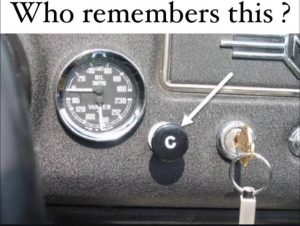
If you ever rode in an older car, you might remember a small button or knob on the dashboard that younger drivers today may not recognize. It was called the manual choke, and it played an important role in starting older vehicles, particularly on cold mornings. Before turning the key, drivers often had to pull this little control to help the engine start more easily.
To understand why it was necessary, it helps to know how older car engines worked. Many vehicles used carburetors to mix air and fuel before sending the mixture into the engine. When temperatures dropped, gasoline did not vaporize as easily, making cold starts more difficult. The manual choke helped by restricting incoming air, creating a richer fuel mixture that made starting the engine easier.
Using the choke required a little experience. Drivers had to know how far to pull it and when to push it back in. As the engine warmed up, the choke needed to be gradually released. Leaving it engaged for too long could cause rough running, increased fuel consumption, and unnecessary exhaust emissions.
Over time, automotive technology made this dashboard control less common. Automatic choke systems took over much of the work, and eventually electronic fuel injection became standard in most modern vehicles. These newer systems automatically adjust the fuel mixture according to engine temperature and other operating conditions.
Today, many younger drivers have probably never seen a manual choke, let alone used one. But for people who grew up driving older cars, that little dashboard button brings back memories of chilly mornings, familiar engine sounds, and a time when starting a vehicle required a little more hands-on knowledge.