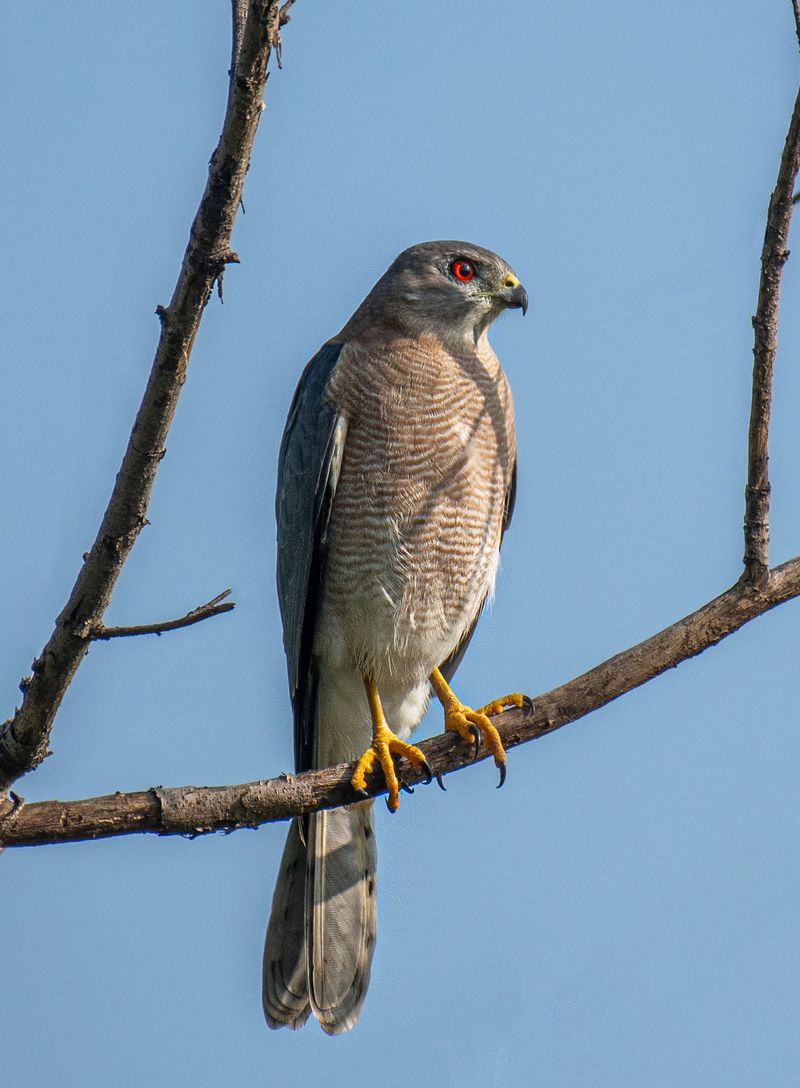
Seeing a Cooper’s hawk in your backyard can be an exciting experience, especially if you enjoy watching wildlife. However, its presence may not be good news for the smaller birds visiting your feeders. These skilled predators hunt songbirds and often use trees, shrubs, and open spaces to surprise their prey. When several birds gather around one feeder, it can become an attractive hunting spot.
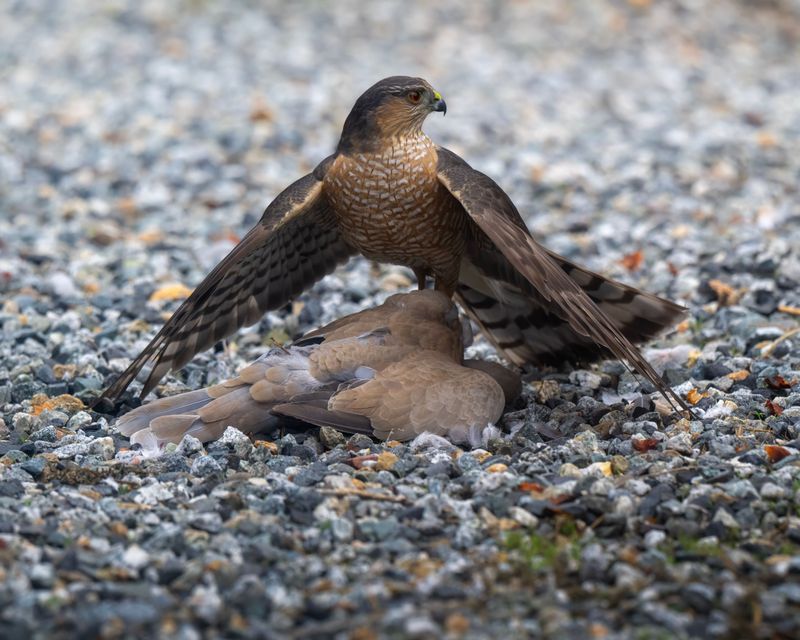
One of the first signs of a hawk nearby is a suddenly quiet yard. Birds that were happily feeding may disappear into bushes and trees when they sense danger. You might also discover scattered feathers beneath a tree or near a perch, which can sometimes indicate that a hawk has caught and eaten a bird. Although unsettling, this is a natural part of wildlife behavior.
If a Cooper’s hawk repeatedly hunts near your feeder, consider temporarily taking the feeder down for one or two weeks. This can interrupt the regular gathering of smaller birds and make that location less attractive as a hunting spot. Adding dense native shrubs nearby can also provide songbirds with places to hide when danger approaches. If you keep backyard chickens, a securely enclosed run with overhead protection is especially important.
It is also worth making windows more visible to birds by adding closely spaced exterior markings to reduce collision risks. Remember that Cooper’s hawks are natural predators and play an important role in the ecosystem. In the United States, they are federally protected, so harming or attempting to capture them is not an appropriate solution. The best approach is to protect your backyard visitors while allowing these beautiful wild hunters to live undisturbed.