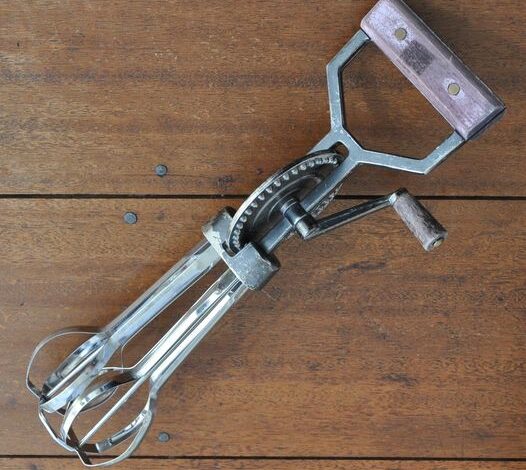
Have you ever given the history of the kitchen tools we use on a daily basis any thought? Let’s go back in time today to discover the intriguing past of one such necessary appliance: the mixer.
The Inaugural Years of Blending
Our narrative starts in the middle of the 1800s, when innovators all around the world began experimenting with ways to simplify and expedite the process of combining ingredients. A Baltimore tinner named Ralph Collier received the first mixer with revolving parts patent in 1856. In less than a year, E.P. Griffith unveiled the whisk, a game-changing appliance for mixing substances. The hand-turned rotary egg beater invented by J.F. and E.P. Monroe left their imprint as well; it was patented in the US in 1859.
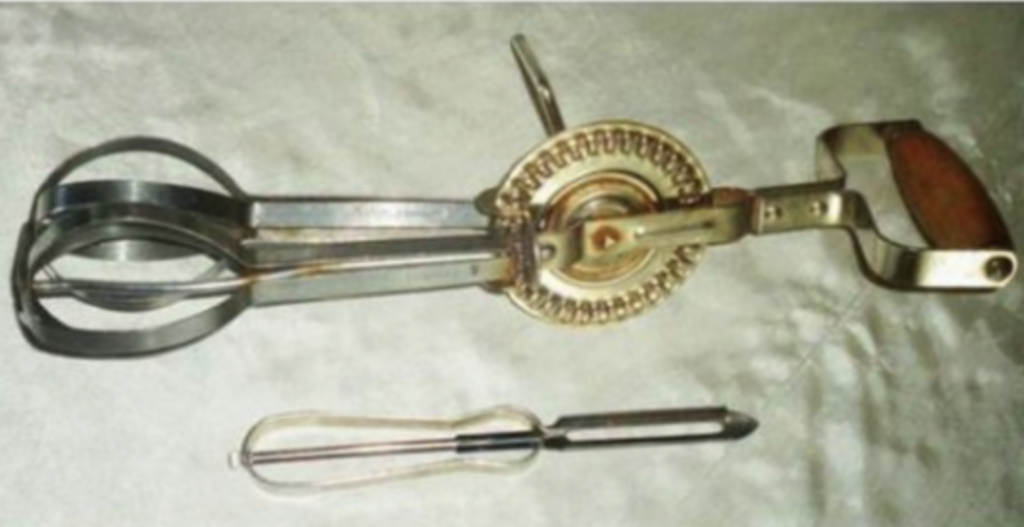
The Dover Stamping Company noticed these early prototypes and purchased the patent from the Monroe Brothers. Known as the “Dover beater,” the Dover egg beaters rose to fame in the United States. The renowned Dover beater was featured in a wonderful dessert dish called “Hur-Mon Bavarian Cream” published in the Cedar Rapids, Iowa Gazette in February 1929, demonstrating how highly esteemed these beaters were.
Welcome to the Age of Electricity
The first electric mixer didn’t appear until 1885, owing to the creative imagination of American inventor Rufus Eastman. But it was the enormous commercial mixers made by Hobart Manufacturing Company that really changed the sector. They debuted a revolutionary new model in 1914 that completely altered the mixer market.
Consumers began to choose the Hobart KitchenAid and the Sunbeam Mixmaster, two well-known American brands, in the early 20th century. However, until the 1920s, when they started to become widely used for domestic use, domestic electric mixers remained a rarity in most families, despite their popularity.
The Stand Mixer: An Innovation
Engineer Herbert Johnston of the Hobart Manufacturing Company had an epiphany in 1908 when he saw a baker using a metal spoon to stir bread dough. After realizing there had to be a simpler method, he set out to develop a mechanical equivalent.
The majority of sizable bakeries had used Johnston’s 20-gallon mixer as regular equipment by 1915. The Hobart Manufacturing Company unveiled the Kitchen Aid Food Preparer, eventually dubbed the stand mixer, just four years later in 1919. This ground-breaking creation swiftly established itself as a national kitchen standard.
This indispensable kitchen appliance has come a long way, starting with the hand-turned rotary beaters of the 19th century and continuing with the invention of electric motors and the stand mixer. Many changes have been made to it to make our lives in the kitchen easier.
Therefore, remember the long history of your reliable mixer the next time you whip up some cookies or mix up a delicious cake batter. It is evidence of human inventiveness and the drive to make daily tasks simpler.

Apart from the mixer, another useful culinary instrument with an intriguing past is the meat grinder. This device, which is sometimes referred to as a “meat mincer” in the UK, is used for chopping and combining raw or cooked meat, fish, vegetables, and other ingredients.
Karl Drais created the first iteration of this amazing device in the nineteenth century, which begins the history of the meat grinder. Long, thin strands of flesh were produced by hand-cranked meat grinders that forced the meat through a metal plate with tiny pores.
As electricity became more widely available and technology advanced, manufacturers started producing meat grinders that were powered. The smooth and consistent processing of many pounds of beef is made possible by these contemporary electric grinders. The functionality of meat grinders has been greatly increased with the addition of attachments for tasks like juicing, kibbe, and sausage-making, which are included with some versions.
Thus, keep in mind the adventure and creativity that led to the creation of your meat grinder the next time you’re chopping meat for a delicious dish or experimenting with handmade sausages. It’s evidence of how kitchen gadgets have developed to enhance and facilitate our culinary explorations.