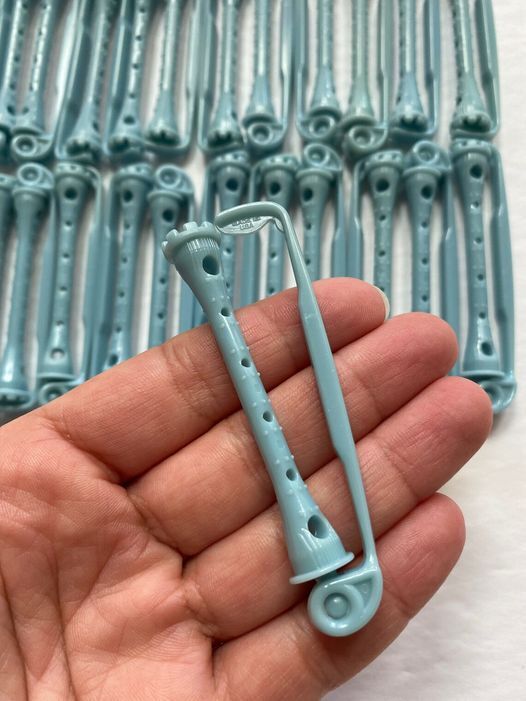
Perm rods, also known as perm rollers or curling rods, are small cylindrical tools used in the process of creating permanent waves or curls in hair. These vintage items have played a significant role in the evolution of hairstyling, reflecting changes in beauty trends and technology over the decades.
A Brief History of Perm Rods
Origins and Early Developments
Perm rods first emerged in the early 20th century, a time when permanent waves or “perms” became a popular hair treatment. The perming process, which involves chemically altering the structure of the hair to create curls or waves, necessitated a tool that could hold hair in place while it was treated. Early perm rods were simple in design, often made from metal or plastic, and had a straightforward cylindrical shape.
By the mid-20th century, perm rods saw significant advancements. The 1950s and 1960s brought a surge in popularity for perms, and the demand led to innovations in rod design. Manufacturers began producing rods in various sizes and materials, including plastic and rubber, to accommodate different curl styles and hair types. The introduction of flexible, plastic-coated rods made the perming process more comfortable and efficient.
Cultural Impact
The 1980s and 1990s marked the height of perm popularity, with perms becoming a mainstream hairstyle trend. This era saw the widespread use of perm rods in salons and homes, as people embraced voluminous curls and waves. The perming process was often associated with a glamorous, high-maintenance look, which contributed to its cultural significance.
Usage of Perm Rods
The Perming Process
The use of perm rods is integral to the perming process. Here’s a simplified overview:
Preparation: The hair is washed and treated with a perm solution, which breaks down the hair’s natural structure.
Rolling: The hair is divided into sections, and each section is wrapped around a perm rod. The size of the rod determines the size of the curl or wave.
Processing: The hair, wrapped in perm rods, is exposed to a chemical solution that sets the curl pattern.
Neutralizing: After processing, a neutralizer is applied to restore the hair’s natural structure and lock in the curls.
Types of Perm Rods
Perm rods come in various sizes, each producing different types of curls:
Small Rods: Create tight, defined curls.
Medium Rods: Produce loose waves or soft curls.
Large Rods: Result in voluminous, beachy waves.
Home vs. Salon Use
While professional salons have historically used perm rods, the rise of at-home perm kits in the 1970s and 1980s allowed individuals to achieve similar results on their own. Home kits included perm rods, solutions, and detailed instructions, making the process more accessible.
Legacy of Vintage Perm Rods
Cultural Significance
Vintage perm rods symbolize a distinctive era in hairstyling, reflecting the beauty trends and technological advancements of their time. They represent a period when curls and waves were highly coveted, and the perm was a symbol of modern sophistication.
Influence on Modern Styling
Though the popularity of perms has waned, the legacy of perm rods continues to influence hairstyling. Today, some stylists and enthusiasts appreciate the vintage charm of perm rods, using them to create retro-inspired hairstyles or as collectible items.
Collectors’ and Enthusiasts’ Interest
Vintage perm rods have found a place in the hearts of collectors and beauty enthusiasts. They are often featured in vintage beauty collections and can be seen in retro-themed salons and beauty museums. Their historical value offers a glimpse into the evolution of hairstyling tools and techniques.
Nostalgia and Revival
The nostalgia associated with vintage perm rods and the perming process has led to a renewed interest in classic curls. Modern hairstylists occasionally use vintage techniques and tools to achieve authentic, old-school looks, blending past and present in their creative work.
Conclusion
Vintage perm rods hold a special place in the history of hairstyling, marking a period of innovation and cultural significance. Their impact on beauty trends, combined with their continued influence on modern hairstyling, underscores their lasting legacy. Whether as historical artifacts or practical tools, perm rods offer a fascinating glimpse into the art and science of haircare through the ages.