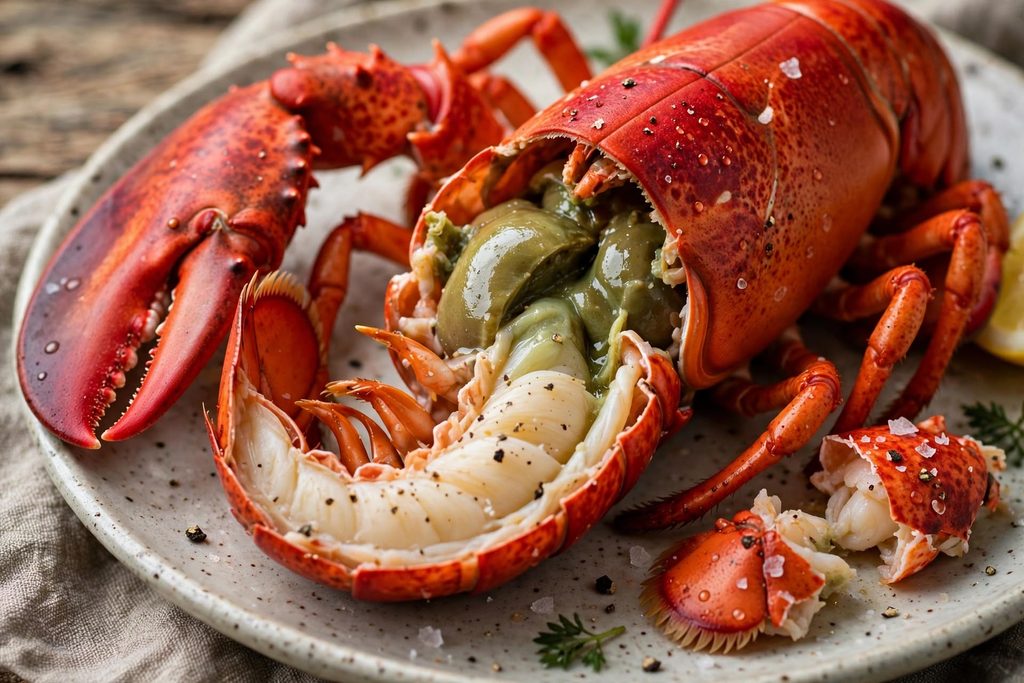
If you have ever opened a cooked lobster, you may have noticed a soft, green substance inside its body. Although it might look unusual or even unappetizing, this substance is called tomalley, and it is a natural part of the lobster’s digestive system. Many seafood lovers recognize it as a traditional delicacy.
Tomalley is often described as the lobster’s liver and pancreas, although it is technically part of a digestive organ called the hepatopancreas. It plays an important role in breaking down food, absorbing nutrients, and storing energy. Its creamy texture and rich, distinctive flavor make it a popular ingredient in certain seafood dishes.
Some people enjoy eating tomalley on its own, spreading it on bread, or mixing it into sauces and seafood recipes. Its strong flavor can add depth to a meal, which is why it has traditionally been valued in some coastal communities.
However, there is an important food safety concern. Tomalley can accumulate environmental contaminants, including toxins from harmful algal blooms. Certain marine biotoxins can cause illness, and cooking does not necessarily destroy them. For this reason, seafood safety authorities have sometimes advised consumers to avoid eating lobster tomalley, particularly when contamination warnings are in effect.
The safest approach is to enjoy the lobster meat while leaving the tomalley uneaten, especially when local health authorities have issued warnings. Removing the green substance does not mean the lobster is spoiled or unsafe by itself. It is simply a precaution that allows you to enjoy the sweet, tender meat while reducing unnecessary exposure to potential contaminants.