Having spent an incredible nine months in space, stranded astronauts Barry Wilmore and Sunita Williams were finally brought back to Earth on Tuesday (March 18).
Having initially made their way to the International Space Station (ISS) in June of 2024, the pair were supposed to complete their mission and make a return journey to Earth after just eight days.
A string of complications, however, forced those plans to change. All told, Wilmore and Williams have been stuck on the ISS for nine months.
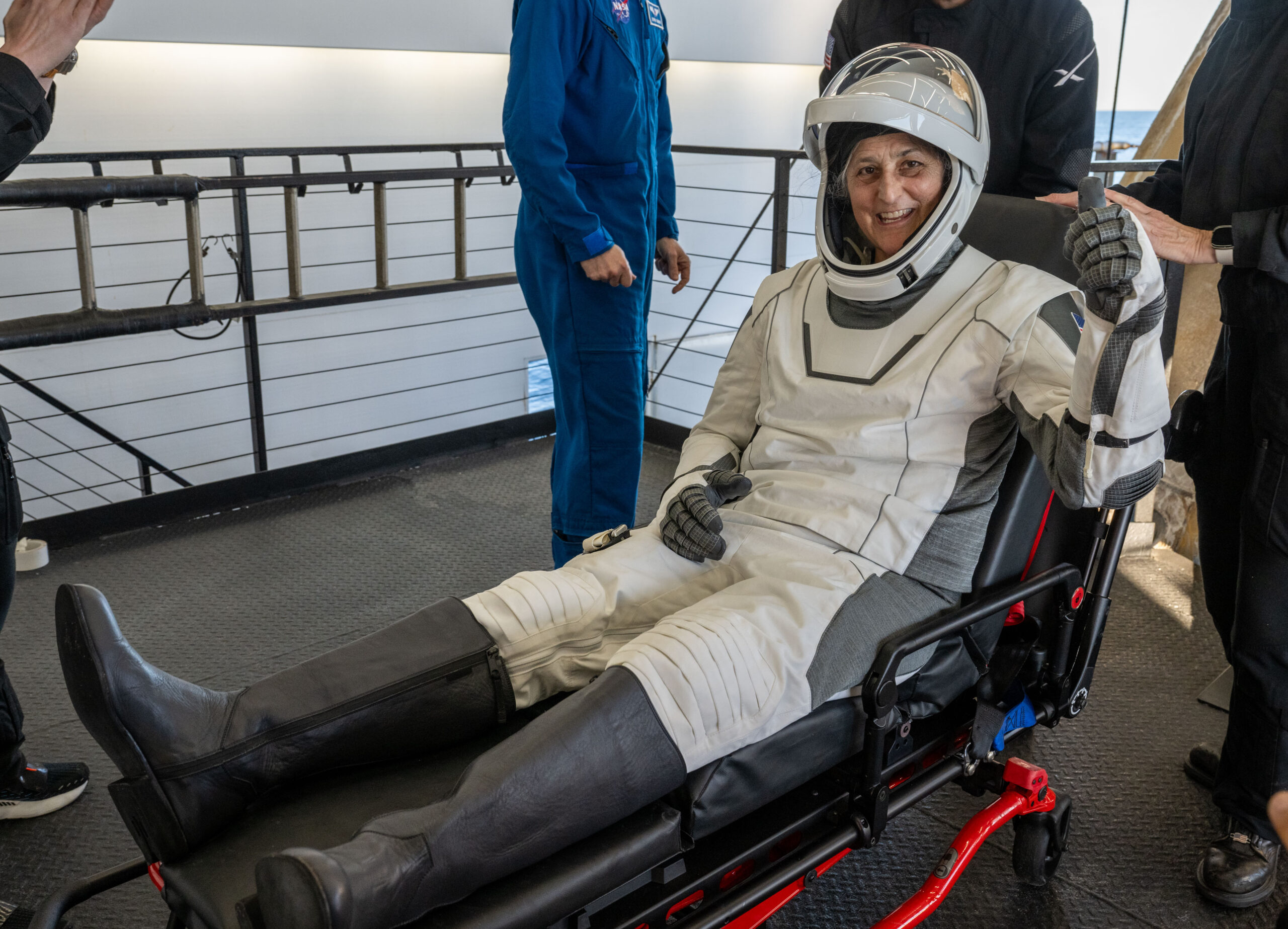
When the pair were finally rescued, being ferried back to their home planet aboard the Space X Dragon spacecraft, they were whisked away on stretchers before they could take a first step on land.
Needless to say, returning from such a long stint in space means adjusting to a fair few things on Earth, with it reported that Wilmore and Williams may face adverse health ramifications.
Aside from breathing actual oxygen from the air, the astronauts are also experiencing gravity against their bones for the first time in nine months, and will also have to contend with conditions such as ‘chicken legs’ and ‘baby feet’, as well as an increased risk of cancer, as per the Daily Mail.

Their initial welcome home period here on Earth will naturally include all manner of tests being undertaken at NASA’s Johnson Space Center in Houston. Yet there are experts who have voiced concerns over tell-tale signs that point to possible issues with their health.
Given the sheer length of their unplanned stay upon the ISS, it’s hardly a surprise that Wilmore and Williams underwent a visible physical transformation prior to their return to Earth. For one, onlookers pointed out that the pair looked gaunt, appearing to have lost quite a bit of weight over the past nine months.
Yet while that’s to be expected, there are other, arguably more concerning health factors to consider, if we’re to listen to the experts.
Some, for example, have spoken on the fact that Wilmore and Williams have a build-up of fluids in their head due to pressure on their eyes and optical nerves. This condition, termed Spaceflight Associated Neuro-Ocular Syndrome (SANS), could affect their appearance.
The majority of astronauts’ eyes return to normal once they’re on Earth again, but NASA says some side effects of SANS could be permanent. Unfortunately, this can depend on how long an astronaut has been in space – potentially bad news for Wilmore and Williams since their stay was so prolonged.
Not only that, but there’s microgravity to consider. The lack of Earth’s gravity causes astronauts’ muscles to atrophy over time, making it difficult for them to maintain a healthy weight (and so affecting their appearance). This was also why they were stretchered away from their vessel after splashing down.
Finally, there’s Spaceflight Venous Thrombosis (SVT), which involves an upward fluid shift and can lead to an astronaut’s face looking ‘puffy’.
What did you make of Wilmore and Williams’ appearances when they finally returned to Earth this week? Let us know in the comments.