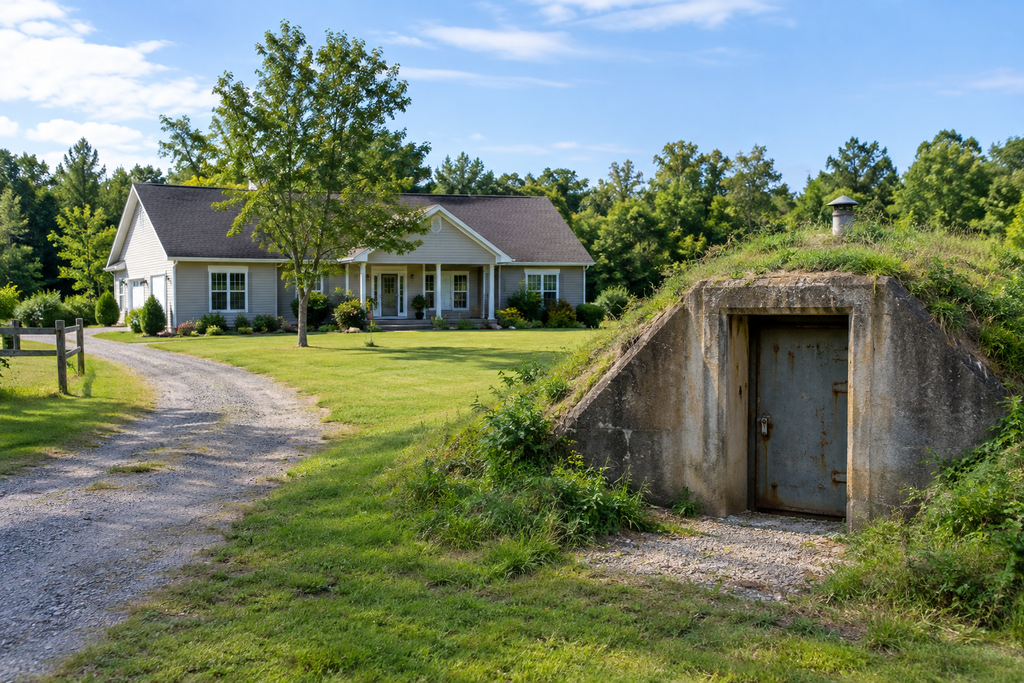
At first glance, this 6.19-acre property appears to be a peaceful rural retreat, complete with a three-bedroom home and plenty of space for gardens, workshops, outdoor projects, or simply enjoying some privacy. But one unusual feature immediately stands out: a concrete bunker. Its presence adds an intriguing question to the property—why was it built, and what purpose did it once serve?
The bunker may be the most fascinating part of the property, but its mystery should not distract potential buyers from the practical details. Before making an offer, buyers should investigate zoning requirements, property boundaries, drainage, water flow, access, and how the land can legally be used. Rural properties can come with restrictions or maintenance issues that are not obvious during a casual visit.
The three-bedroom house also deserves a thorough professional inspection. The roof, foundation, plumbing, electrical system, heating, and other major components should be checked for problems that could become costly later. The bunker should receive the same attention, particularly if its age, construction, or original purpose is unclear.
Buyers should try to determine when the bunker was constructed, whether permits were required, and whether records about it are available. Its condition should also be carefully evaluated for cracks, moisture, poor ventilation, drainage issues, structural concerns, and difficult access. Any later modifications or previous uses should also be documented if possible.
The property offers an unusual combination of acreage, a home, privacy, and a structure with an intriguing history. The bunker could become a memorable feature, but it could also bring additional expenses and responsibilities. Before buying, investigate the land, inspect the home and bunker, verify available records, and make sure you understand exactly what you are purchasing. The mystery may add to the property’s charm, but the facts should guide the decision.