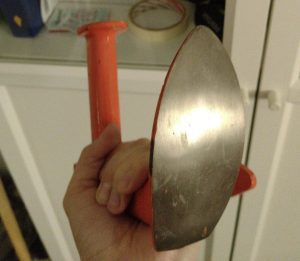
A heavy, three-legged metal object discovered near a recycling bin might look like an unusual piece of scrap at first glance. With its bright paint, solid construction, and oddly shaped feet, it is easy to mistake it for an old piece of machinery. However, this curious object may actually be a cobbler’s anvil, a traditional tool once used by shoemakers to repair and reshape footwear.
Unlike ordinary anvils, a cobbler’s anvil features several differently shaped metal supports designed for specific tasks. Shoemakers used these surfaces to work on shoe soles, heels, and other narrow areas. The sturdy construction provided a stable platform for hammering leather, shaping materials, and securing shoe components with small nails.
The polished and worn surfaces are another interesting detail. Rather than being decorative, these smooth areas often developed after years of repeated use. As generations of shoes came into contact with the steel, the metal gradually became polished, leaving visible signs of the work performed by its previous owner.
Its unusual three-legged design also helps distinguish it from ordinary farm tools and industrial equipment. Many cobbler’s anvils were designed to stand independently, allowing shoemakers to position shoes comfortably while working. Their compact but heavy construction made them practical tools in traditional shoe repair shops.
Today, surviving examples are reminders of a time when repairing footwear was an important everyday trade. Some collectors appreciate these objects for their craftsmanship and historical value, while others reuse them as decorative pieces or conversation starters. What might initially appear to be worthless scrap metal could actually be a fascinating piece of traditional shoemaking history.