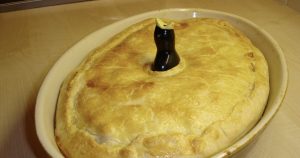
A small ceramic kitchen accessory known as a pie bird has been helping bakers create better homemade pies for generations. Usually shaped like a bird, this unusual tool is placed in the center of a pie before baking. Although it may look like a simple decoration, it has an important purpose: allowing steam to escape while helping prevent the filling from bubbling over and making the crust soggy.
Pie birds are also called pie vents, pie funnels, pie whistles, or pie chimneys. Their hollow bodies act as small chimneys, carrying excess steam from the filling to the outside of the pie. The opening around the bird’s beak allows moisture to escape, while the ceramic structure helps support the top pastry and prevents it from sinking into the filling.
Using a pie bird is surprisingly easy. First, place it upright in the center of the bottom crust after adding the filling. Next, cover the pie with the top pastry and make a small opening directly above the bird. Gently guide its head through the opening, seal the pastry edges, and bake according to your recipe. Once the pie has cooled, the bird can be carefully removed.
This traditional baking tool works especially well with juicy fruit pies, such as apple, cherry, and berry varieties. These fillings release considerable moisture during baking, which can create pressure beneath the top crust. However, pie birds are generally unnecessary for custard pies, cream pies, single-crust desserts, and no-bake recipes. Small cuts in the pastry can also provide ventilation if you don’t have one.
Despite its old-fashioned appearance, the pie bird remains a useful accessory for home bakers. Available in many shapes, colors, and designs, it combines practicality with a little kitchen charm. The next time you see a tiny ceramic bird in someone’s kitchen, remember that it is more than a decoration—it is a clever little helper designed to make homemade pies turn out beautifully.