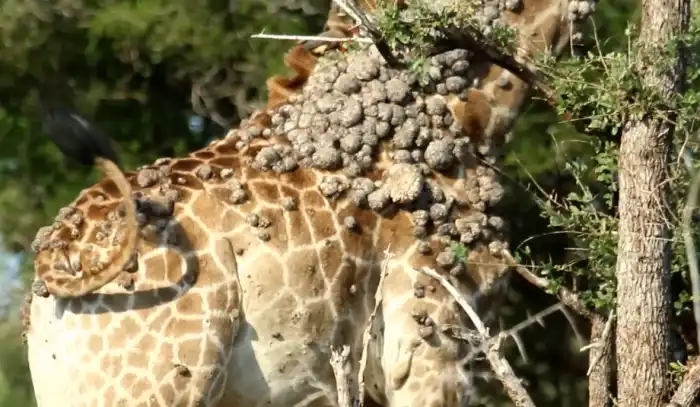
Wildlife photographer Helen Olive was visiting South Africa’s Kruger National Park when she noticed a giraffe that looked very different from the animals she was used to seeing. At first, the rough texture around its neck appeared to be vegetation or tree bark partly hiding the animal. Looking closer, she realized the unusual surface was actually part of the giraffe’s skin.
The giraffe had thick, crusty lesions covering portions of its neck, creating a dramatic appearance that was difficult to miss. The condition was attributed to papillomavirus, which can cause raised or thickened skin growths. Although the lesions may look alarming in photographs, their appearance alone does not mean the animal is close to death or facing an immediate life-threatening emergency.
The greater concern can come from complications. If the affected skin becomes irritated, the giraffe may repeatedly scratch or rub the area, potentially creating wounds that could become infected. Living in the wild also means the animal has no access to the type of routine medical treatment available to domestic animals. Its protected habitat can shield it from some human threats, but diseases, injuries, and infections remain part of life in nature.
The sighting also highlights the complicated relationship between wildlife species. Oxpeckers are often seen feeding on parasites and other material found on large mammals, but their pecking can sometimes involve damaged skin. While such interactions are a natural part of the ecosystem, contact with affected areas may potentially contribute to the spread of infection between animals.
WATCH VIDEO:
Olive’s photographs ultimately captured more than an unusual-looking giraffe. They offered a glimpse into the health challenges wild animals can experience while continuing to survive in their natural environment. The giraffe’s condition may look heartbreaking, but its unusual appearance does not by itself prove that the animal is dying. Instead, the encounter serves as a reminder that even in protected places like Kruger National Park, wildlife must constantly cope with disease, injury, and the unpredictable realities of life in the wild.