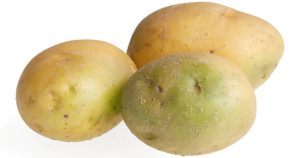
Have you ever noticed green patches appearing on potatoes stored in your kitchen? This change may seem harmless, but it can be a warning sign that the potato has been exposed to too much light. Sunlight or artificial lighting triggers the production of chlorophyll, the natural pigment responsible for the green color. Unfortunately, this process can also be associated with increased levels of glycoalkaloids, particularly solanine, which can be harmful when consumed in large amounts.
Solanine is a naturally occurring chemical that potatoes produce as part of their defense against insects and other threats. When levels become elevated, eating the potato may cause nausea, vomiting, stomach cramps, and diarrhea. Green coloration does not tell you exactly how much solanine is present, but it is a reason to be cautious.
What should you do if you find a green potato? If the discoloration is very small and limited to the surface, some food safety guidance allows removing the affected areas generously, including the surrounding skin and flesh. However, if the potato is extensively green, tastes bitter, or has several green patches, it is safest to throw it away. Cooking does not reliably destroy solanine.
It is also important to understand that green discoloration is different from dark spots or rings inside a potato. Dark areas can result from bruising, internal damage, or other conditions and do not necessarily indicate elevated solanine levels. Nevertheless, potatoes with unusual smells, extensive damage, or signs of decay should be discarded.
Preventing green potatoes is relatively simple. Store them in a cool, dry, and dark place, away from sunlight and strong artificial lighting. A cupboard or pantry is usually a better choice than an open countertop. Check your potatoes before preparing meals, and remember that proper storage can help preserve their quality while reducing the risk of unwanted chemical buildup.