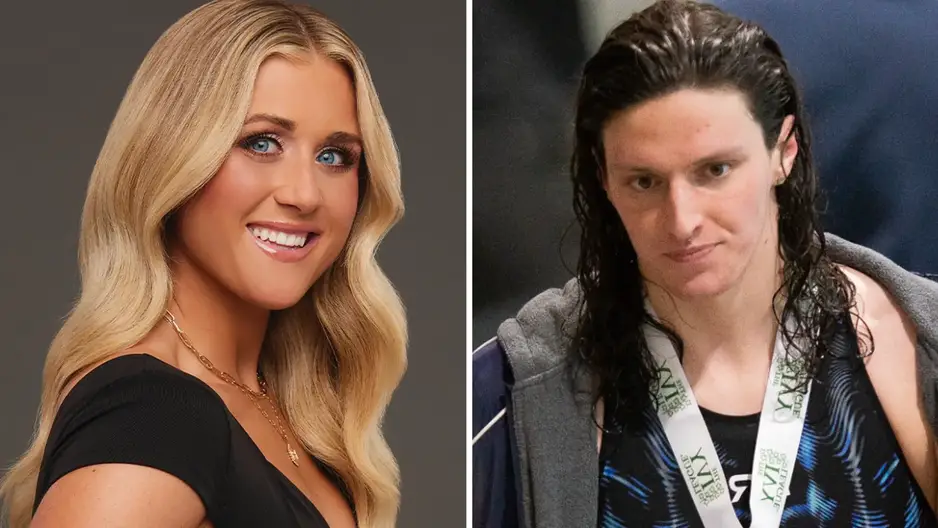
In a decision that has both shocked and delighted the sports world, Lia Thomas, the transgender swimmer from the University of Pennsylvania, has been disqualified from the 2024 Olympics, while Riley Gaines, a prominent swimmer from the University of Kentucky, has qualified to compete. The ruling has sparked widespread debate, bringing to the forefront the complex issues surrounding gender identity, inclusivity, and fairness in sports.
Lia Thomas’ disqualification was announced by the International Swimming Federation (FINA) and the International Olympic Committee (IOC). According to their statement, Thomas was disqualified based on the governing bodies’ updated policies on transgender athletes, which emphasize the need for maintaining fairness in women’s sports competitions.
The policies state that transgender women must maintain testosterone levels below a certain threshold for at least 12 months prior to competition. Despite Thomas meeting these requirements, FINA and the IOC cited concerns about the physical advantages she might have retained from undergoing male puberty. “The decision was made after careful consideration of the scientific evidence and the need to ensure fair competition,” the statement read.
Lia Thomas has been a polarizing figure in the sports community since she began competing in women’s swimming events after transitioning. Her dominance in the pool has led to numerous victories and record-breaking performances, but it has also sparked intense debate about the fairness of allowing transgender women to compete in female categories.
Supporters of Thomas argue that she has followed all the required regulations and should be allowed to compete as her true self. They emphasize the importance of inclusivity and the need to support transgender athletes in all areas of life, including sports. “Lia has worked incredibly hard and deserves the chance to compete,” said an advocate from Athlete Ally, an organization that supports LGBTQ+ athletes.
However, critics contend that despite hormone therapy, transgender women may retain physical advantages that can undermine the integrity of women’s sports. “It’s about ensuring a level playing field,” said one critic. “We need to protect the opportunities and fairness for female athletes.”

In contrast to Thomas’ disqualification, Riley Gaines has emerged as a notable success story. Gaines, a standout swimmer from the University of Kentucky, has qualified to represent the United States in the 2024 Olympics. Known for her dedication and impressive performances, Gaines has been a consistent competitor and a role model for aspiring swimmers.
Gaines’ qualification is a significant achievement and has been celebrated by many in the swimming community. “I am incredibly honored and excited to represent my country in the Olympics,” Gaines said in a statement. “This has been a dream of mine, and I’m grateful for all the support from my family, coaches, and teammates.”
The disqualification of Lia Thomas and the qualification of Riley Gaines have sparked a wide range of reactions from the public, athletes, and advocacy groups. Social media platforms have been flooded with opinions, highlighting the deep divide on the issue of transgender athletes in sports.
Supporters of Thomas have expressed their disappointment and frustration, arguing that the decision is a step backward for inclusivity and the rights of transgender individuals. “This ruling is discriminatory and unfair,” tweeted one supporter. “Lia Thomas has followed all the rules, yet she is being punished simply for being herself.”
On the other hand, supporters of Gaines have applauded the decision, viewing it as a victory for fairness in women’s sports. “This is the right call,” said a fan. “It’s important to ensure that all athletes compete on an equal footing. Riley Gaines has earned her place fair and square.”
The controversy surrounding Lia Thomas and Riley Gaines underscores the broader debate about the inclusion of transgender athletes in sports. This debate involves balancing the rights of transgender individuals to compete as their authentic selves with the need to maintain fair competition for all athletes.
Scientific studies on the impact of hormone therapy on athletic performance provide mixed results. Some research suggests that transgender women may retain advantages in muscle mass and strength despite hormone suppression, while other studies indicate significant reductions in these areas. The evolving nature of this research makes it challenging to create policies that are both inclusive and fair.
Sports governing bodies like FINA and the IOC play a crucial role in navigating these complex issues. Their decisions have significant implications not only for individual athletes but also for the broader principles of fairness and inclusivity in sports.
The updated policies on transgender athletes aim to strike a balance, but they are not without controversy. As the science continues to evolve, these policies may need further adjustments to reflect new understandings and ensure that all athletes are treated fairly and respectfully.
For Lia Thomas, the disqualification is undoubtedly a major setback. However, her journey as an athlete and advocate for transgender rights is far from over. Thomas has expressed her commitment to continue competing and advocating for inclusivity in sports. “This is not the end of my story,” she said in a recent interview. “I will keep fighting for my right to compete and for the rights of all transgender athletes.”
Riley Gaines, meanwhile, is preparing for the biggest stage of her career. Her qualification for the 2024 Olympics is a testament to her hard work and talent. As she gears up for the competition, Gaines remains focused on representing her country and achieving her personal best. “I’m ready to give it my all and make my country proud,” she said.
The disqualification of Lia Thomas from the 2024 Olympics and the qualification of Riley Gaines highlight the ongoing complexities and debates surrounding transgender athletes in sports. These developments underscore the need for continued dialogue, research, and thoughtful policy-making to ensure that sports remain inclusive and fair for all participants.
As the world of sports evolves, the stories of athletes like Lia Thomas and Riley Gaines will continue to shape the conversation about gender, identity, and fairness. Their journeys reflect the broader societal challenges and the importance of finding solutions that honor both the rights of individuals and the principles of fair competition.