The landmark is visited by one and a half million tourists each year
One and a half million tourists visit a landmark that is more radioactive than legally allowed at a power plant every year.
It’s probably not the first thing you’d think of unless you were walking somewhere like Chernobyl.
Although there’s luckily no ‘claw of death’ that could kill you with a single touch – unlike Chernobyl.
But no, it’s not in Europe but rather it’s in the good ole’ US of A.
And if you are from New York City, then it’s probably not news to you – as it’s Grand Central Terminal.
According to Forbes, one and a half million tourists visited the station in 2023 – excluding train and subway passengers – while more than 750,000 pass through it every single day.
It’s also the second most-visited tourist attraction in New York outside of Times Square.
So how could something so accessible to the public give off such a high rating on the geiger meter?

Grand Central Terminal is more radioactive to work in than a power plant. (Getty Stock Image)
It is thanks, or without thanks actually, to its large mass of granite and brick that is used throughout it – a jaw dropping feature that has helped keep it a tourist attraction for the last 111 years.
Yes, believe it or not, the beautiful architecture that is on display was designed and built between 1903 and 1913.
Due to all that granite, it has become more radioactive than what is permitted in nuclear power plants because the rock emits radiation.
According to Department of Energy, certain parts of the station average of 525 mrem per year – which the measure used to estimate potential health effects of low levels of ionizing radiation on the human body.
However, if you were just visiting, or even if you worked there, it wouldn’t actually be dangerous at all – you wouldn’t mutate.
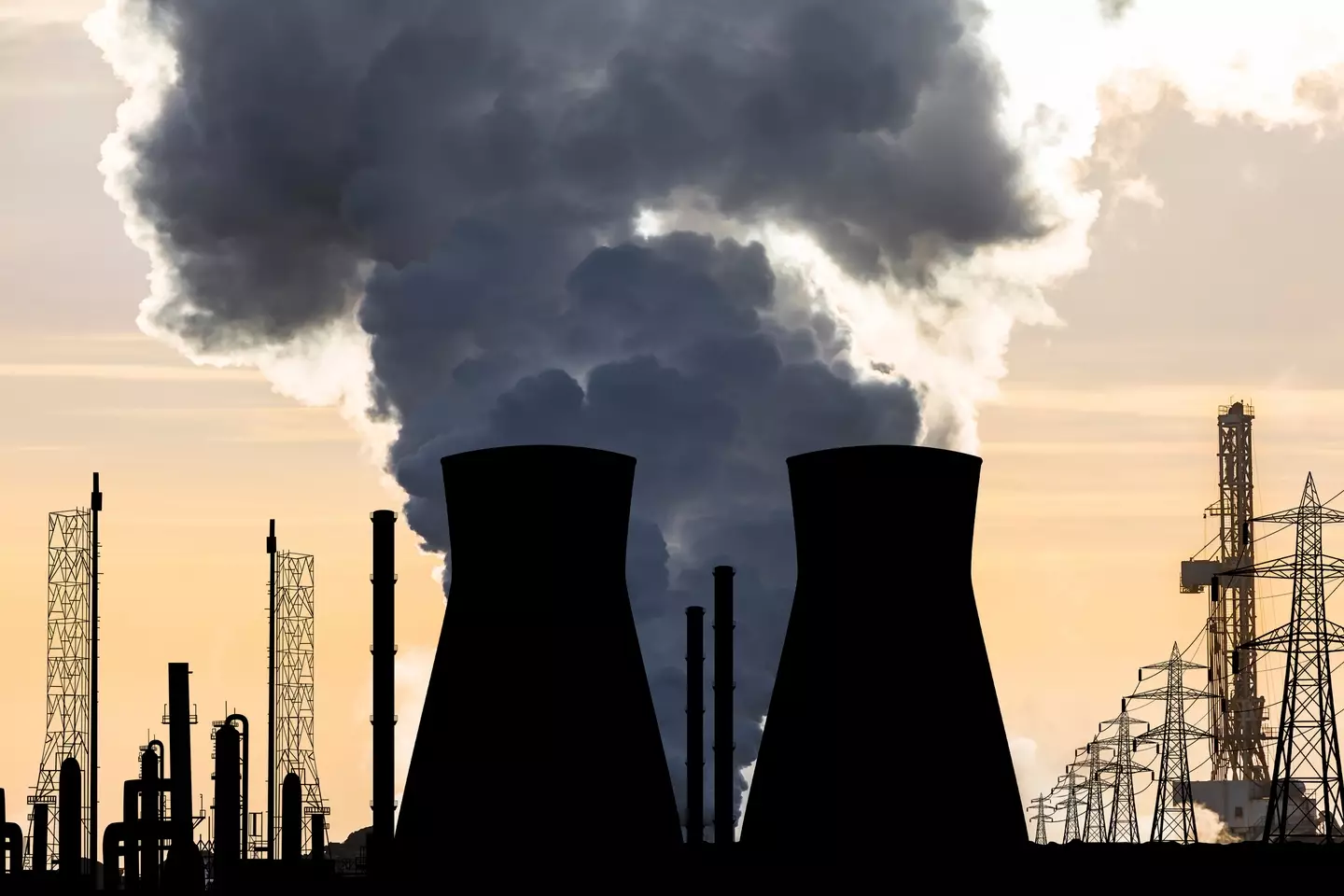
Grand Central emits more radiation to employees working at the landmark than staff at nuclear power plants across the country. (Getty Stock Image)
While radiation sounds manmade – simply because we jump to the assumption of nuclear bombs – it actually comes from natural materials.
That is the reason it is so widely used and visited from people in every inch of the world – like x-rays and radiotherapy for example – so we are exposed to radiation everywhere we go.
As per ABC News, nuclear researcher Eric Hall also says the doses at Grand Central are ‘very, very small’.
The base of the exterior is made out of a flashy Stony Creek granite, while Indiana limestone, from Bedford, Indiana, makes up the upper portion of the building.
So next time you visit the big Apple, be sure to stop by Central Terminal.