In a cozy corner of your grandmother’s attic, nestled within the treasure trove of her vintage sewing kit, you might find a small collection of metallic objects that hark back to a time of meticulous handcraft and personal touch. These are thread bobbins, quintessential to the operation of a sewing machine, once as common in households as the ubiquitous smartphone is today.
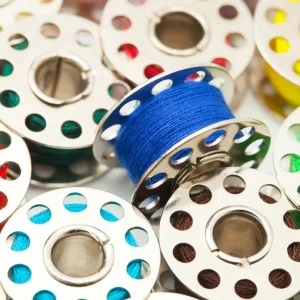
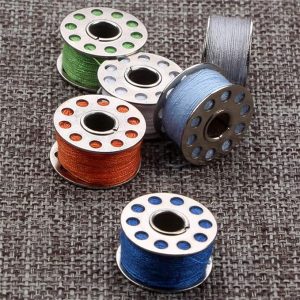
The year is 1970, and these bobbins symbolize more than just components of a sewing apparatus; they are emblems of self-sufficiency and creativity. Each bobbin, with its tiny holes and hollow core, was designed to be wound tightly with thread, ready to be slotted into a sewing machine, the heartbeat of domestic creation.
Sewing was not just a pastime but a necessary skill, passed down from generation to generation. It was the art of turning a flat piece of fabric into something three-dimensional, something that could adorn a body or decorate a home. In an age before fast fashion and mass production, these bobbins helped create garments that would be worn for years, perhaps even handed down through the family.
These small tools, now antiquated and often overlooked, were once at the center of a ritual. They spun the threads that pieced together wedding dresses, hemmed school uniforms, and patched up the knees of well-loved jeans. Behind each bobbin was a story, a moment of someone’s life. You could almost hear the rhythmic hum of the sewing machine in sync with the radio, the murmur of concentration, and the occasional sigh of frustration or exclamation of triumph.
Source: Amazon
Finding these bobbins in Granny’s sewing can is like unearthing a time capsule. It’s a tangible connection to the past, a past where handmade wasn’t a luxury but a way of life. It’s a reminder of the care that went into each stitch, the pride in creating something from scratch, and the joy of making do and mending.
Now, as we seek a return to sustainability and personal touch, these bobbins aren’t just relics; they’re inspirations. They remind us of the value of patience, the beauty of craftsmanship, and the importance of preserving the skills that can help us lead more thoughtful and intentional lives. Just like the thread that winds around them, the story they tell is continuous, looping back through history and forward into the future.