Imagine walking to the bathroom in the middle of the night and suddenly seeing a creature with dozens of long legs racing across the floor. Its striped body, long antennae, and incredible speed can make it look like something from a horror movie. This unsettling visitor is often a house centipede, a common household arthropod that tends to appear when people least expect it.
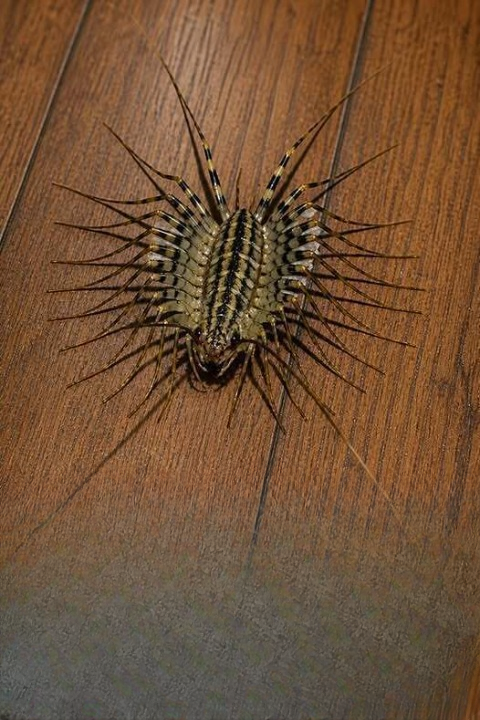
Despite their frightening appearance, house centipedes are generally not dangerous to humans and usually try to avoid contact with people. They prefer dark, damp environments such as basements, bathrooms, laundry rooms, and other quiet corners of a home. These areas provide shelter and access to the small insects they hunt, making houses with moisture problems or other pests particularly attractive to them.
Surprisingly, house centipedes can help control unwanted insects. Their diet includes silverfish, ants, cockroaches, spiders, moths, and other small arthropods. They use their speed and modified front legs to capture prey, helping reduce the number of some household pests. Although they possess venom for subduing their prey, bites to humans are uncommon. If a bite does occur, it may cause localized pain, redness, or swelling.
If you would rather not share your home with these fast-moving creatures, there are several practical steps you can take. Reduce indoor humidity with ventilation or a dehumidifier, repair leaking pipes, and keep damp areas dry. Sealing cracks around windows, doors, and foundations can limit entry points. Controlling other insects can also make your home less appealing to hungry centipedes.
Although house centipedes can still trigger an instinctive shudder when they suddenly dart across the floor, understanding their behavior makes them less mysterious. They are predators that generally prefer to stay hidden rather than interact with people. You do not have to welcome them into your home, but their presence may offer a clue about moisture or other insects nearby. Sometimes, the creature that looks the most alarming is simply another part of the household ecosystem.





